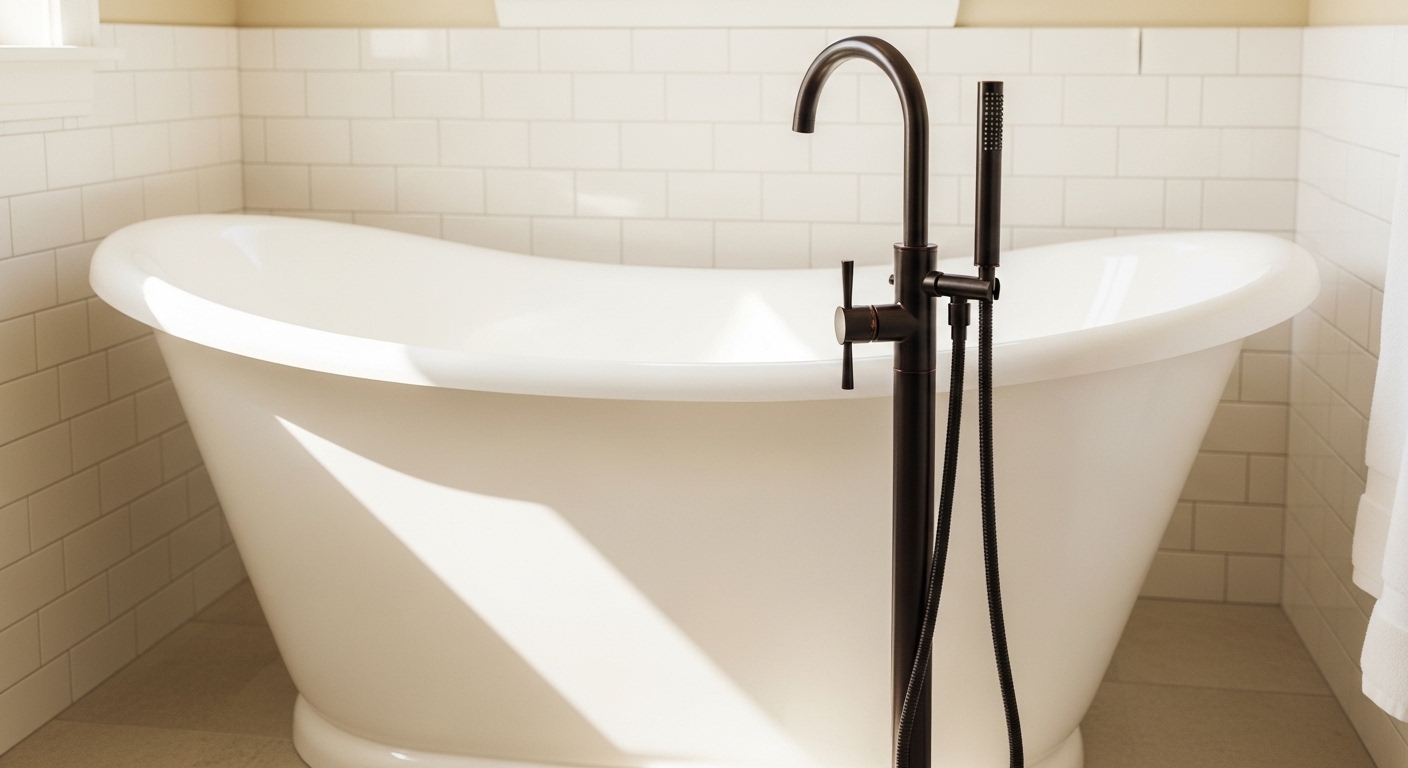
An oil rubbed bronze bathtub faucet is one of the easiest ways to give a bathroom a richer, more intentional look without remodeling a single tile. The deep brown-black finish with subtle copper undertones pairs beautifully with both traditional and transitional bathrooms, and unlike polished chrome, it hides water spots, toothpaste splatter, and fingerprints with almost no effort. But “oil rubbed bronze” is a finish, not a faucet — and the wrong faucet body, valve type, or spout reach can turn a beautiful upgrade into a plumbing headache. This guide walks you through everything that actually matters before you buy.
At Avamani, we’ve spent years helping homeowners match fixtures to real tub setups, and the questions are almost always the same: Will the finish wear off? Does it fit my existing plumbing? Tub-mounted or wall-mounted? Below, we answer all of it in plain language.
Why Choose an Oil Rubbed Bronze Bathtub Faucet?
The case for an oil rubbed bronze bathtub faucet comes down to three things: appearance, maintenance, and versatility. The finish reads as warm and substantial. It has a hand-finished, slightly variegated look — lighter on the high points, darker in the recesses — that gives even an inexpensive tub a custom feel.
Maintenance is where this finish quietly wins. Chrome and polished nickel show every droplet. Oil rubbed bronze (often abbreviated ORB) has a matte, low-reflectivity surface that disguises spotting and smudges. For a bathtub faucet — constantly splashed, frequently touched with wet hands — that’s a practical advantage you’ll appreciate every single day.
Versatility rounds it out. Oil rubbed bronze coordinates with nearly any palette: white tubs, black tile, wood vanities, brushed gold accents, even matte black hardware. It’s a safe long-term choice that won’t look dated in five years.
The Trade-Offs to Know
- It’s a darker finish. In a small or low-light bathroom, ORB can feel heavy. Balance it with lighter walls or a mirror nearby.
- Quality varies enormously. True living finishes age gracefully; cheap painted-on coatings chip. More on this below.
- Hard water leaves mineral film. Spots hide well, but dried mineral deposits can still build up and should be wiped occasionally.
- Replacement matching is harder. If you ever need to add a matching accessory years later, dye lots and finish processes shift slightly between manufacturers.
Types of Oil Rubbed Bronze Bathtub Faucets
Before you fall in love with a photo, you need to know which faucet category fits your tub. The mounting style is dictated by your plumbing rough-in, not your preference — so confirm this first.
Deck-Mounted (Tub-Mounted) Faucets
These install directly onto the flat deck or rim of the bathtub. They’re common with drop-in and undermount tubs that have a wide ledge. Deck-mounted oil rubbed bronze bathtub faucets typically come as a 3-hole or single-hole set and require the tub itself to be pre-drilled.
Wall-Mounted Faucets
Here the spout and handles come out of the wall above the tub. This is the classic setup for alcove tubs and standard tub/shower combinations. Wall-mounted models keep the tub deck clean and are easier to wipe around.
Freestanding (Floor-Mounted) Faucets
The dramatic option for clawfoot and modern freestanding tubs. The faucet rises on a tall pillar from the floor. These require a floor rough-in and are the most plumbing-intensive to install, but the visual payoff with an oil rubbed bronze finish is significant.
Roman Tub Faucets
A subset of deck-mounted faucets with a wide, low-arc spout designed to fill large soaking tubs quickly. If you have a deep tub, check the flow rate — a Roman tub filler moves far more water than a standard faucet.
Comparing Oil Rubbed Bronze to Other Popular Finishes
If you’re still weighing finishes, this table compares oil rubbed bronze against the other top contenders for a bathtub faucet.
| Finish | Look | Hides Spots & Fingerprints | Maintenance | Best For |
|---|---|---|---|---|
| Oil Rubbed Bronze | Warm dark brown-black, copper undertones | Excellent | Low — occasional wipe | Traditional & transitional baths |
| Polished Chrome | Bright, mirror-like | Poor | High — shows everything | Modern, budget-friendly builds |
| Brushed Nickel | Soft satin silver | Good | Low to moderate | Versatile, neutral bathrooms |
| Matte Black | Flat, bold, contemporary | Very good | Low — may show mineral film | Modern & high-contrast designs |
| Brushed Gold | Warm satin brass | Good | Low to moderate | Glam & warm-toned spaces |
The takeaway: if low maintenance and a warm, forgiving look are priorities, an oil rubbed bronze bathtub faucet is hard to beat. Chrome is cheaper upfront but demands constant wiping.
How the Finish Is Made — and Why It Matters
Not all oil rubbed bronze is created equal, and this is the single biggest factor separating a faucet that lasts 20 years from one that looks shabby in two.
Living Finish vs. Coated Finish
A true living finish is a chemically darkened layer over solid brass. It’s designed to age — high-touch areas like the handles and spout tip will slowly lighten over years, revealing warmer bronze tones underneath. Many homeowners love this evolving patina; it’s the authentic, antique look.
A coated finish uses a clear protective topcoat (often a baked-on or PVD layer) over the bronze color to lock the appearance in place. PVD — physical vapor deposition — is the most durable option available and resists scratching, corrosion, and color change. If you want your faucet to look identical on day one and year ten, PVD oil rubbed bronze is what you want.
What to Avoid
The lowest-tier products use a sprayed-on paint or epoxy “finish” over zinc or pot metal. These chip at the edges, peel near the aerator, and can’t be repaired. A reliable signal of quality is the faucet body material: solid brass is the standard for a faucet you intend to keep.
Key Specs to Check Before You Buy
Once you’ve settled on style and finish quality, these technical details determine whether the faucet actually works in your space.
- Hole configuration & spread. Match your tub’s existing drilling — single-hole, 3-hole 8-inch spread, or widespread. Retrofitting new holes in an acrylic or cast iron tub is difficult.
- Valve type. Ceramic disc cartridges are the gold standard — they resist drips and handle hard water far better than older rubber-washer compression valves.
- Spout reach and height. The spout must clear the tub rim and direct water toward the center of the basin, not the wall or the edge.
- Flow rate (GPM). Standard faucets run around 1.8–2.2 GPM. Tub fillers and Roman tub faucets are intentionally higher (often 6+ GPM) so a deep tub fills in a reasonable time.
- Diverter, if combined with a shower or handshower. Confirm the faucet includes the diverter type you need.
- Connection size. Most U.S. bathtub faucets use 1/2-inch connections, but always verify against your supply lines.
Installation: DIY or Call a Pro?
A like-for-like replacement of a deck-mounted oil rubbed bronze bathtub faucet is within reach for a confident DIYer. Swapping a wall-mounted or freestanding faucet, or changing mounting types entirely, usually means opening a wall or floor — that’s professional territory.
Basic Steps for a Deck-Mount Replacement
- Shut off the water supply and open the faucet to relieve pressure.
- Disconnect the supply lines and remove the old faucet’s mounting hardware from beneath the deck.
- Clean the deck surface thoroughly so the new base seats flat.
- Set the new faucet with fresh gaskets or plumber’s putty per the manufacturer’s instructions.
- Reconnect supply lines, restore water, and check every connection for leaks before walking away.
Whatever route you choose, follow the manufacturer’s installation manual exactly — it specifies torque, sealant type, and clearances that protect both the faucet and your warranty.
Caring for Your Oil Rubbed Bronze Bathtub Faucet
The good news: ORB is among the most forgiving finishes to maintain. The bad news: a few common cleaning habits will ruin it.
- Do wipe with a soft, damp cloth and dry it occasionally to prevent mineral film.
- Do use a mild dish soap solution for anything stubborn.
- Don’t use abrasive pads, scouring powders, or “magic eraser” type sponges — they strip the finish.
- Don’t use acidic or ammonia-based cleaners, including many bathroom sprays and vinegar. They can etch or discolor the bronze.
- Don’t let cleaning products sit on the surface; rinse promptly.
Treated this way, a quality oil rubbed bronze bathtub faucet will look excellent for the life of your bathroom.
How to Match Your Faucet to the Rest of the Bathroom
To make the faucet feel designed-in rather than added-on, carry the finish through the room. Coordinate the tub faucet with the drain and overflow trim, the showerhead, towel bars, robe hooks, and cabinet pulls. You don’t need everything to match perfectly — mixing oil rubbed bronze with matte black or warm wood looks intentional — but the plumbing fixtures within a single zone (the tub area) should agree.
One practical tip: buy the tub faucet and its matching drain trim at the same time, from the same line, so the finishes are consistent. Sourcing a matching drain months later is the most common matching frustration we hear about.
FAQ
Does an oil rubbed bronze bathtub faucet finish wear off over time?
It depends on the type. A true living finish is meant to lighten gradually in high-touch areas — that’s a feature, not a defect. A PVD-coated oil rubbed bronze finish is engineered to stay virtually unchanged for many years. A cheap sprayed-on coating, however, can genuinely chip and peel. Choosing a solid-brass body with a PVD or quality living finish prevents the bad kind of wear.
Is oil rubbed bronze out of style?
No. While ultra-bright trends come and go, warm, low-maintenance finishes like oil rubbed bronze have remained a steady favorite for traditional and transitional bathrooms. Because it coordinates with so many palettes, it tends to age well rather than looking dated.
Can I mix oil rubbed bronze with other finishes in my bathroom?
Yes, and it often looks better than an all-matching room. ORB pairs especially well with matte black, brushed gold, and natural wood. The general rule is to keep fixtures within one functional zone — like everything around the tub — consistent, while allowing variety across the wider room.
What faucet body material should I look for?
Solid brass. It resists corrosion, holds threads well, and gives the finish a durable base to adhere to. Zinc alloy or “pot metal” bodies are common in budget faucets but are more prone to finish failure and cracking over time.
How do I know which mounting type fits my tub?
Look at where your current faucet comes from. If it sits on the flat rim of the tub, you need a deck-mounted model. If it comes out of the wall, you need wall-mounted. If it rises from the floor next to a freestanding tub, you need a floor-mounted filler. Changing mounting types requires re-plumbing, so matching your existing rough-in is strongly recommended.
Is an oil rubbed bronze faucet hard to keep clean?
It’s actually one of the easiest finishes to keep looking good, because its matte surface hides water spots and fingerprints. The only caution is to avoid abrasive and acidic cleaners — stick to mild soap and a soft cloth, and it stays low-effort.
The Bottom Line
An oil rubbed bronze bathtub faucet delivers a warm, high-end look with genuinely low day-to-day maintenance — provided you choose a solid-brass body with a quality finish and match the mounting type to your existing plumbing. Get those two things right, and the rest is simply picking the style you love.
About the author: This guide was written by the Avamani fixtures team, drawing on hands-on experience helping thousands of homeowners select and install bathtub faucets across every tub configuration. Every product we publish guidance on is evaluated against our internal checklist for finish durability, valve quality, and body material.
About Avamani: Avamani is a dedicated faucet and bathroom fixture retailer focused on durable, well-engineered hardware. Our oil rubbed bronze faucets feature solid-brass construction and ceramic disc valves, are tested to meet recognized industry plumbing and water-efficiency standards, and are backed by a manufacturer warranty so you can buy with confidence.