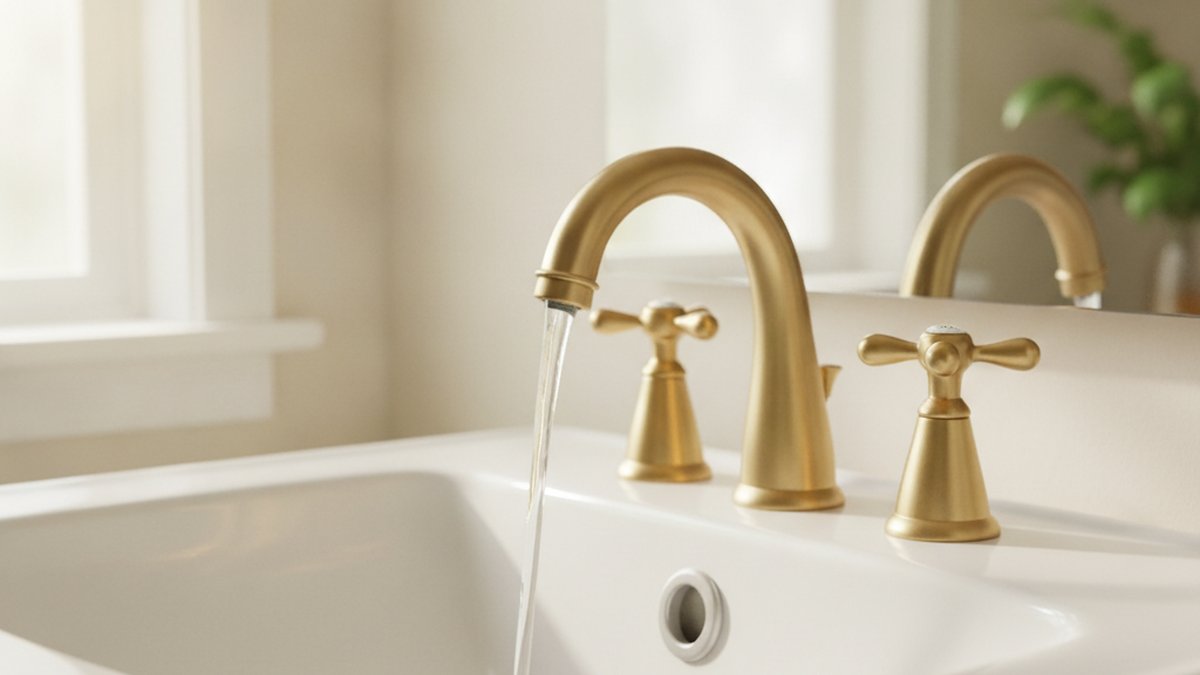
If you’ve been searching for a brass tap Towson homeowners actually trust, the short version is this: brass is the right material for Baltimore County’s moderately hard, sometimes mineral-heavy water, and you don’t need a boutique showroom to get a good one. What matters far more than where the tap physically sits on a shelf is whether it’s forged solid brass, how the finish is sealed, and whether the valve inside is ceramic disc. Get those three things right and you’ll have a faucet that outlives your kitchen remodel.
Below, we’ll answer the real questions people in Towson ask before they buy — about local water, finishes, price, and installation — the way a knowledgeable plumber friend would explain it over coffee, not the way a catalog would.
Why do people in Towson specifically want a brass tap?
Because brass handles Baltimore County water better than almost anything else, and because the older housing stock around Towson often has plumbing that pairs naturally with brass fittings. Towson sits in an area served largely by the Baltimore City/County system, where water hardness typically runs in the moderately hard range (roughly 60–120 mg/L as calcium carbonate, depending on your street and the season). That mineral content is exactly what chews up cheap zinc-alloy and plastic-bodied faucets over a few years.
Solid brass is a copper-zinc alloy that resists corrosion, tolerates hot water without warping, and doesn’t get brittle the way pot-metal (zamak/zinc) does. When mineral-rich water sits in the faucet body overnight — which it does in every home — brass simply shrugs it off. That’s the practical reason a brass tap is worth it here, not nostalgia.
There’s also a housing-stock reason. Many Towson homes, especially in older neighborhoods off Joppa Road and around the university, were built with copper supply lines and threaded brass valves. A brass tap threads and seals into that plumbing cleanly, and if you ever need to swap internal components, brass parts are standardized and easy to source. If you want to see how the internal pieces fit together, our guide to essential brass faucet parts breaks down every component you might replace over the tap’s life.
Is solid brass actually better than “brass-plated” or stainless — or am I paying for a name?
Solid brass is genuinely better for longevity, but “brass-plated” is a different (and weaker) product you should avoid. Here’s the distinction that trips up most buyers:
- Solid/forged brass: The entire faucet body is brass alloy. This is what you want. It’s heavy, corrosion-resistant, and repairable.
- Brass-plated (zinc core): A thin brass-colored layer over a cheap zinc casting. It looks identical on day one and fails in 2–4 years as the plating flakes and the zinc corrodes.
- Stainless steel: Excellent and hygienic, but usually a modern look; harder to get in warm gold/antique tones, and often more expensive to cast in intricate traditional shapes.
The fastest at-home test: pick it up. A solid-brass single-hole tap typically weighs 3–5 lbs; a plated-zinc knockoff of the same size feels noticeably lighter and “hollow.” Weight is the honest signal manufacturers can’t fake.
| Material | Typical lifespan | Corrosion resistance | Repairable? | Best for |
|---|---|---|---|---|
| Solid forged brass | 15–20+ years | Excellent | Yes — standard parts | Hard water, traditional & modern homes |
| Brass-plated zinc | 2–4 years | Poor | Rarely | Avoid |
| Stainless steel | 15–25 years | Excellent | Sometimes | Modern, high-hygiene kitchens |
| Chrome-plated brass | 10–15 years | Very good | Yes | Budget-conscious, bright look |
Notice that chrome-plated brass is still a fine choice — the plating is cosmetic and the body underneath is solid. The trap is chrome-plated zinc, which is the cheap end of the market. Always confirm the base material, not just the finish.
Which brass finish should I choose for Towson’s water?
For most Towson homes, a lacquered or PVD-coated brass finish (polished brass, brushed gold, or living/unlacquered brass if you like patina) all work — the choice is about looks and maintenance, not durability, because the brass underneath is what fights corrosion. The finish just changes how it ages and how much you clean it.
Here’s the plain-language breakdown of the finishes people ask about most:
- Polished brass (lacquered): Bright, warm gold. A clear lacquer seals it so it won’t tarnish, but you shouldn’t scrub it with abrasives that scratch the lacquer.
- Brushed/satin brass: Softer, matte gold. Hides water spots and fingerprints best — great for a busy family bathroom or kitchen.
- Unlacquered (“living”) brass: Raw brass that develops a natural patina over time. It’s the choice for vintage and farmhouse looks, but it will darken and needs occasional polishing if you want it bright. We cover this look in depth in our piece on the unlacquered brass bar faucet.
- PVD gold/champagne bronze: A vapor-deposited finish that’s extremely scratch- and tarnish-resistant — arguably the most bulletproof finish for hard water.
If your water leaves white mineral spots on glass, lean toward brushed or PVD finishes — they mask spotting far better than high-polish surfaces. And whatever you pick, clean with mild soap and water, never a bleach or ammonia cleaner, which can strip lacquer and dull the metal.
How much should a good brass tap cost in the Towson area in 2026?
Expect to pay $90–$180 for a genuinely good solid-brass bathroom tap and $180–$350 for a solid-brass kitchen faucet, delivered. Anything under about $60 that claims to be “brass” is almost always plated zinc, and anything over $500 is usually paying for a designer name rather than better engineering.
Buying online and shipping to Towson usually beats a local showroom on price because you skip the showroom’s overhead markup, which commonly runs 20–40%. The trade-off is you can’t hold the tap first — so the weight test and spec-sheet reading we described above matter more. Here’s a realistic budget breakdown:
| Budget tier | Price range (delivered) | What you get |
|---|---|---|
| Entry solid brass | $90–$140 | Forged body, ceramic disc valve, lacquered finish, 5-yr warranty |
| Mid-range | $140–$250 | Heavier body, PVD finish, better aerator, limited-lifetime warranty |
| Premium | $250–$400+ | Artisan/traditional styling, upgraded cartridge, lifetime finish warranty |
One local factor to budget for: if your home is older and the shutoff valves under the sink are original, plan another $20–$60 for new quarter-turn stops and braided supply lines. Corroded old valves are the single most common reason a “simple” tap swap turns into a two-hour job in an older Towson house.
Can I install a brass tap myself, or do I need a Towson plumber?
Most single-hole and 4-inch centerset brass bathroom taps are a genuine 30–60 minute DIY job if your shutoff valves work and you own an adjustable wrench and a basin wrench. You only need a plumber if the shutoffs are seized, the supply lines are soldered, or you’re moving from a single-hole to a widespread configuration.
Here’s the realistic step-by-step for a standard replacement:
- Turn off both hot and cold shutoff valves under the sink and open the old tap to release pressure.
- Disconnect the supply lines with an adjustable wrench (keep a towel and small bucket handy — there’s always residual water).
- Loosen the mounting nut under the sink with a basin wrench and lift the old tap out.
- Clean the mounting surface, then set the new brass tap with its gasket or a bead of plumber’s putty per the instructions.
- Tighten the mounting hardware, reconnect braided supply lines (hand-tight plus a quarter turn), and slowly reopen the valves.
- Run hot and cold for a full minute, checking every joint for drips.
If the tap makes a rattling or whistling noise once it’s on, that’s usually a loose aerator or trapped air, not a defect — our guide on fixing a noisy bathroom tap walks through the quick fixes before you assume something’s wrong. And if you’re replacing a centerset unit specifically, the finish and hole-spacing tips in our polished nickel centerset faucet guide apply just as well to a brass one.
What makes a brass tap last 20 years instead of 5?
Three things: a forged (not cast) brass body, a ceramic disc cartridge, and a quality finish that’s either lacquered or PVD-coated. Miss any one of these and you’re on a shorter clock. Let’s take them one at a time, because this is where the real engineering lives.
Forged brass body. Forging compresses the metal grain, making the body denser and less porous than a cast body. Less porosity means fewer pinhole leak points and better resistance to the dezincification that eventually turns cheap brass pink and brittle. Look for the phrase “low-lead forged brass” on the spec sheet.
Ceramic disc cartridge. The cartridge is the part that actually opens and closes the water. Ceramic disc valves are rated for 500,000+ cycles and don’t wear the way old rubber-washer compression valves do. They’re also the reason a good tap turns smoothly with one finger years later. If a tap ever does drip, a ceramic cartridge is a $15–$30 swap, not a reason to replace the whole faucet.
Lead safety and standards. This one matters for anything that touches drinking water. A reputable brass tap sold in the U.S. should meet the federal “lead-free” standard (Safe Drinking Water Act, ≤0.25% weighted-average lead on wetted surfaces) and ideally carry NSF/ANSI 61 and 372 certification. Avamani’s brass taps are independently tested to these standards, so the water coming out is safe for a family, including kids.
Brass tap vs. the trendy alternatives — what actually fits a Towson home?
For a traditional or transitional Towson home, brass is usually the better long-term buy; for an ultra-modern renovation, stainless or matte black may fit the aesthetic better, but they don’t outperform brass on durability. The decision is mostly about the look you’re building around, since all three quality options will last well over a decade.
If you’re outfitting a period-appropriate bathroom — think the older colonials and Cape Cods common around Towson — a warm brass or unlacquered finish reads as intentional and ages gracefully. Pair it with a vintage-style basin and you’re set; our traditional vessel sink faucet guide shows how those pieces work together. For a crisp modern kitchen, you might weigh brass against stainless — but even then, PVD brass and champagne bronze have become the dominant “warm modern” look for a reason: they resist fingerprints and hard-water spotting better than bright chrome.
The one scenario where I’d steer you away from brass is a rental you plan to flip quickly on the tightest possible budget — there, a chrome-plated brass tap gives you 80% of the durability at a lower price point. But for a home you actually live in, solid brass earns its keep.
FAQ
Does Avamani deliver a brass tap to Towson, MD?
Yes. Avamani ships brass taps directly to Towson and the surrounding 21204, 21252, and 21286 ZIP codes, typically arriving in 2–5 business days. Because it ships direct, you skip the showroom markup, and returns within the warranty window are handled by mail.
Will a brass tap tarnish or turn green in Baltimore County water?
A lacquered or PVD-coated brass tap won’t tarnish or verdigris under normal use, even with moderately hard local water. Only unlacquered (“living”) brass develops a patina on purpose — and even that is surface-level and polishes off. Avoid ammonia- and bleach-based cleaners, which can strip the protective coating.
Is brass safe for drinking water, or does it leach lead?
Modern brass taps sold in the U.S. must meet the federal lead-free standard (≤0.25% lead on wetted surfaces), and quality ones carry NSF/ANSI 61 and 372 certification. That makes them safe for drinking water. Older, uncertified brass fixtures made before 2014 can contain more lead, which is one more reason to replace a very old tap.
How do I tell if a “brass” tap is actually solid brass before I buy?
Check the spec sheet for “solid” or “forged brass,” and use weight as a tiebreaker — a solid-brass single-hole tap runs 3–5 lbs, while a plated-zinc fake feels hollow and light. If the listing only says “brass finish” or “brass-plated,” it’s a zinc core and will fail faster.
What size and configuration brass tap do I need for my sink?
Count the holes in your sink or countertop. One hole means a single-hole tap; three holes at 4 inches apart means a centerset; three holes at 8+ inches means a widespread. Also check your spout reach so water lands in the drain, not the basin edge — our guide on faucet spout reach explains how to measure it correctly.
How long is the warranty on an Avamani brass tap?
Avamani brass taps carry a limited-lifetime warranty on the finish and function for residential use, with the ceramic cartridge covered separately. Keep your order confirmation as proof of purchase, since warranty claims are tied to it.
Author note: This guide was written by Avamani’s fixtures team, drawing on hands-on testing of solid-brass taps in hard-water conditions and years of fielding installation questions from homeowners. Avamani is a dedicated faucet and bathroom-fixture retailer — we sell fixtures, not everything — and every brass tap we list is independently tested against NSF/ANSI 61 and 372 lead-safety standards and backed by a limited-lifetime warranty. When we say a tap lasts 20 years, it’s because we’ve watched the failure points on the ones that don’t.