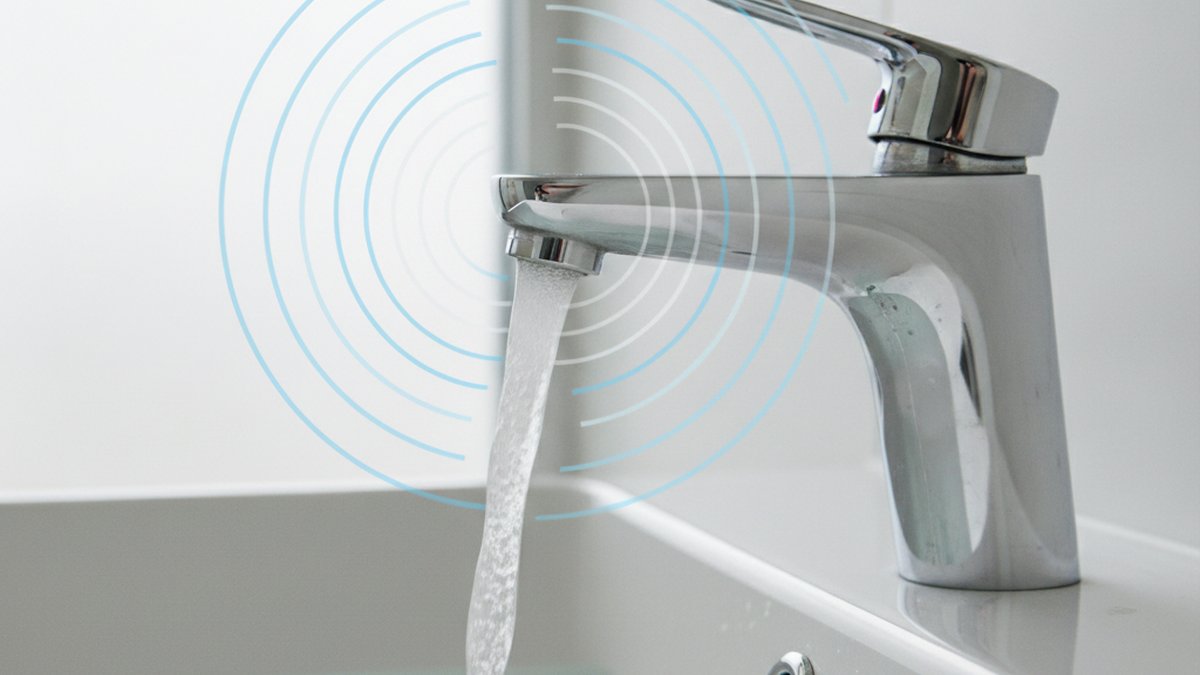
If you’ve got a noisy bathroom tap — that squeal when you open it halfway, a machine-gun rattle when you shut it off, or a low hum that fills the whole bathroom — the good news is that it’s rarely a serious plumbing failure. In the vast majority of cases it’s a cheap, worn part inside the tap or a pressure issue in the line behind it. This guide walks through what each noise actually means, how to diagnose it in five minutes, and how to fix it yourself without calling a plumber for what’s usually a $3 part.
At Avamani we design and test bathroom and kitchen fixtures, and “why is my tap making that noise” is one of the most common questions we get from customers. So we’ve put together the same diagnostic checklist our own product team uses when a tap comes back for testing.
What does the type of noise tell me about what’s wrong?
The sound is your single best diagnostic clue — different noises point to completely different causes. Match your tap’s noise to the list below before you touch a tool, because it tells you whether you’re replacing a 3-cent washer or chasing a pressure problem in the wall.
- Squealing or screeching (rises as you open the tap): almost always a worn, hardened, or wrong-size rubber washer in a compression tap, vibrating against the seat.
- Banging or hammering (a loud knock when you shut the tap off fast): water hammer — the moving column of water slamming to a stop. Caused by high pressure, loose pipes, or a failed arrestor.
- Humming or vibrating (constant while water runs): usually excessive water pressure making a washer or valve component resonate.
- Whistling: a restriction — a partly blocked aerator, a half-closed isolation valve, or a scaled-up cartridge forcing water through a narrow gap.
- Gurgling or spitting: trapped air in the line, common after the mains has been off.
- Chattering or rattling: a loose washer or jumper valve, or a loose pipe behind the wall.
Notice how most of these come back to two culprits: a worn washer/cartridge, or water pressure. Nail down which category you’re in and the fix is straightforward.
Why does my bathroom tap squeal or screech when I turn it on?
A squealing bathroom tap is nearly always a worn or wrong-fitting washer vibrating against the valve seat. As the rubber hardens with age, it stops sealing smoothly and starts to flutter under flowing water — and that flutter is the squeal you hear. This is the single most common cause of a noisy bathroom tap, and it’s the cheapest to fix.
This mostly affects older compression taps (the kind with separate hot and cold handles you screw down). The rubber washer at the bottom of the spindle is a wear part — it’s meant to be replaced. Once it’s gone brittle, no amount of tightening helps; over-tightening actually accelerates the squeal and can score the seat.
Here’s how to replace it:
- Turn off the water at the isolation (service) valve under the basin — a quarter-turn with a flat screwdriver. If there isn’t one, shut the main stopcock. Open the tap to release pressure.
- Plug the drain so you don’t lose small screws.
- Remove the handle — pop the hot/cold index cap, undo the screw underneath, and lift the handle off.
- Unscrew the headgear/bonnet nut with an adjustable spanner and lift out the spindle.
- Replace the washer at the base (usually held by a small brass nut or just pushed on). Match the diameter exactly — a 1/2″ tap takes a 1/2″ washer.
- Check the seat — if it feels rough or pitted, reseat it with a reseating tool. A damaged seat will chew through a new washer fast.
- Reassemble, turn the water back on slowly, and test.
If your basin runs on a single-lever mixer rather than two compression handles, the equivalent wear part is the cartridge, not a washer — we cover that next. Not sure which tap you have? Our guide to a single hole lav faucet explains the difference between compression and cartridge basin taps and how to identify yours at a glance.
My tap bangs or hammers when I shut it off — what is water hammer?
Water hammer is the loud bang you hear when you close a tap quickly: the fast-moving water in the pipe hits the suddenly-closed valve and shockwaves back through the plumbing. It’s a pressure problem, not a tap problem — but it often shows up first at the bathroom tap because that’s where you’re opening and closing valves.
Left alone, water hammer can loosen joints and, over years, cause leaks — so it’s worth fixing rather than ignoring. Work through these from easiest to hardest:
- Turn taps off more slowly as a quick test. If the bang disappears, you’ve confirmed it’s water hammer.
- Secure loose pipes. If a pipe can rattle against a joist or wall, the shockwave makes it knock. Clip or cushion any pipe you can access.
- Check your water pressure. Domestic pressure above about 80 psi (5.5 bar) causes hammer, noise, and premature washer wear. A $10 gauge that screws onto a hose bib tells you in seconds.
- Fit or recharge an arrestor. Older homes have air chambers that can waterlog; a modern mini water-hammer arrestor fitted at the valve absorbs the shock.
- Install a pressure-reducing valve (PRV) if whole-house pressure is high. This is the permanent fix and also protects every other fixture in the house.
High pressure is a recurring villain here — it doesn’t just cause banging, it also drives the humming and the squealing by forcing components to vibrate. If you fix nothing else, get a pressure reading. It’s the fastest way to rule the big problem in or out.
Why does my single-lever mixer tap hum or vibrate?
A humming or vibrating single-lever mixer is usually a worn ceramic-disc cartridge combined with high water pressure. As the cartridge ages, tiny imperfections let water pass turbulently, and under strong pressure that turbulence resonates as a hum you can sometimes feel through the handle.
The fix is a cartridge swap — the mixer equivalent of changing a washer. Cartridges are tap-specific, so match the brand and model. The steps:
- Isolate the water and open the tap to drain it.
- Prise off the lever cap, undo the grub screw, and lift the lever.
- Unscrew the retaining ring or dome cover.
- Undo the cartridge fixing screws or the brass nut and lift the cartridge straight out.
- Drop in the matching replacement, making sure the alignment pegs seat in their holes, and reassemble.
If the hum persists with a brand-new cartridge, the pressure is almost certainly your problem — go back to the pressure-gauge check above. Cartridges and washers are cheap, but they’ll fail early and re-hum if they’re fighting 90 psi every day. For a rundown of the internal parts worth keeping on hand, our overview of brass faucet parts covers cartridges, washers, O-rings, and seats and which ones actually fail.
Which noises can I fix myself, and which need a plumber?
Most noisy-tap fixes are genuinely DIY — a washer, cartridge, or aerator swap needs only basic tools. Call a professional when the noise points to something structural: whole-house pressure, pipework hidden in walls, or a valve seat you can’t reseat cleanly. Use this table to decide.
| Noise | Most likely cause | Typical fix | Cost | DIY? |
|---|---|---|---|---|
| Squeal / screech | Worn compression washer | Replace washer (+ reseat) | $1–$5 part | Yes |
| Hum / vibrate | Worn cartridge + high pressure | New cartridge; check PRV | $8–$25 part | Yes |
| Whistle | Blocked aerator / part-closed valve | Clean or replace aerator | $0–$10 | Yes |
| Gurgle / spit | Trapped air | Bleed the line | $0 | Yes |
| Bang / hammer | High pressure / loose pipe | Arrestor, clip pipes, PRV | $10–$150 | Sometimes |
| Constant rumble in wall | Failing internal valve / pipework | Professional inspection | Varies | No |
How do I fix a whistling or humming tap caused by the aerator?
A whistling tap is usually a clogged or over-tight aerator — the little mesh screen on the end of the spout. Mineral scale and grit narrow the openings, and water forced through the smaller gaps whistles. Cleaning it takes about five minutes and no replacement part.
- Unscrew the aerator by hand (turn clockwise as you look up at it) or wrap it in cloth and use pliers gently.
- Separate the layers, noting the order.
- Soak the parts in white vinegar for 20–30 minutes to dissolve limescale, then brush with an old toothbrush.
- Rinse and reassemble; don’t over-tighten — hand-tight plus a nudge is enough.
If cleaning doesn’t help, a new aerator is a couple of dollars. In hard-water areas this becomes routine maintenance every 6–12 months, and it also fixes weak or splashy flow at the same time.
Why does my bathroom tap only get noisy after the water has been off?
If your tap started spitting, gurgling, or knocking right after the mains was shut off and back on, the cause is almost certainly trapped air in the pipes — not a faulty tap. Air pockets get pushed through the system and stutter out of the spout.
To bleed the air out, open the affected tap fully and let it run for a minute or two — start with the lowest tap in the house and work up, or open several taps at once, then close them from highest to lowest. The sputtering settles as the air clears. If it doesn’t clear within a few minutes of steady running, or comes back repeatedly, you may have a failing seal drawing air in, which is worth investigating. This same “air in the line” effect is why fixtures elsewhere in the house can act up after plumbing work — the same principle behind the odd behavior described in our guide to a tub spout that leaks when the shower is on.
What tools and parts should I have on hand?
You can handle almost every noisy-tap fix with a short list of cheap tools and consumables. Having these on hand turns a $150 call-out into a 20-minute job.
- Flat and Phillips screwdrivers (for isolation valves and handle screws)
- Adjustable spanner and, ideally, a basin wrench
- An assorted washer and O-ring kit (match sizes to your tap)
- The correct replacement cartridge for your mixer model
- White vinegar and an old toothbrush for descaling
- Plumber’s silicone grease for O-rings and spindles
- A $10 water-pressure gauge — the most underrated diagnostic tool you can own
- PTFE (plumber’s) tape for any thread you disturb
Always turn off the water and open the tap to release residual pressure before you start, and plug the drain. If a fitting is seized, don’t force it — penetrating oil and patience beat a cracked casting every time.
When is a noisy tap actually telling me to replace the whole tap?
Replace the tap rather than repair it when the body is corroded, the valve seat is too pitted to reseat, the tap is a discontinued model you can’t get cartridges for, or you’ve swapped the wear parts and the noise persists. At that point new internals cost more hassle than they’re worth.
A modern mixer with a quality ceramic-disc cartridge runs quieter and lasts longer than an old compression tap you keep re-washering. If you’re replacing anyway, look for taps rated for your pressure range and finished to a standard that resists the scale build-up that causes whistling in the first place. And if the noise turns out to be coming from the shower side of the bathroom rather than the basin, our breakdown of a shower valve system replacement covers what’s involved and whether it’s a DIY job.
FAQ
Is a noisy bathroom tap dangerous?
Usually not immediately, but it shouldn’t be ignored. A squeal or hum is just a worn part. Persistent water hammer, though, sends shockwaves through your pipes that can loosen joints and eventually cause leaks — so banging is worth fixing sooner rather than later. A constant rumble inside the wall warrants a professional look.
Why is my tap noisy only when the hot water runs?
If only the hot side is noisy, suspect the hot tap’s washer or cartridge specifically, or your water heater / expansion tank creating pressure fluctuations on the hot line. Heat also hardens rubber washers faster, so the hot tap’s washer often fails first. Start by replacing the hot-side washer or cartridge.
Can high water pressure really make my tap noisy?
Yes — it’s one of the top two causes. Pressure above roughly 80 psi (5.5 bar) makes washers and cartridges vibrate (humming and squealing) and drives water hammer (banging). Test with a screw-on pressure gauge; if you’re over 80 psi, a pressure-reducing valve fixes the noise and protects every fixture in the house.
How much does it cost to fix a noisy bathroom tap?
DIY, most fixes cost only the part: a washer is $1–$5, an aerator or O-ring kit a few dollars, and a cartridge $8–$25. A water-hammer arrestor is $10–$40. A plumber call-out typically runs $80–$200, which is why the washer and cartridge swaps are so worth doing yourself.
Why does my new tap already make noise?
A brand-new tap that hums or whistles almost always points to your water pressure or a partly-closed isolation valve rather than the tap itself. Open the isolation valves fully, check the pressure, and make sure the aerator wasn’t cross-threaded on install. If pressure is high, fit a PRV — otherwise the new tap’s cartridge will wear early too.
Do I need to turn off the whole water supply to fix it?
Not usually. Most basins have isolation (service) valves on the hot and cold supply lines underneath — a quarter-turn with a flat screwdriver shuts off just that tap. Only if there’s no isolation valve do you need the main stopcock. Always open the tap afterward to release trapped pressure before you dismantle anything.
Author note: Written by the Avamani fixtures team. We design, pressure-test, and cycle-test bathroom and kitchen taps in-house, running valves through tens of thousands of open/close cycles and checking them against standard flow and pressure ratings (aligned with WaterSense and EN 200-series performance expectations). Avamani has spent over a decade manufacturing and quality-testing faucets, and our mixers ship with a limited warranty on the cartridge and finish — so if a noise is a genuine defect rather than wear, it’s covered. This guide reflects the same diagnostic checklist our engineers use on returned units.