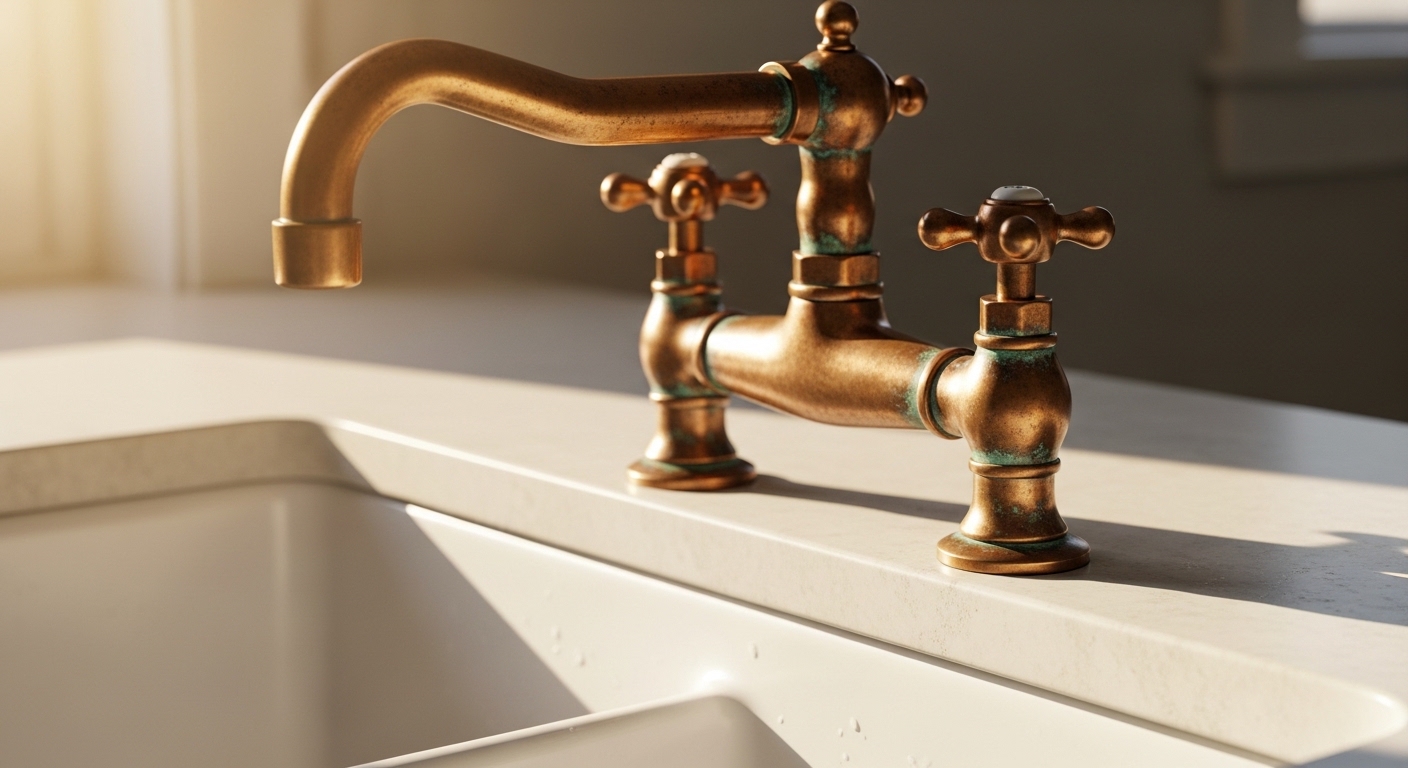
A copper tap vintage design is one of those rare fixtures that gets better looking with age instead of worse — but that’s only true if you buy the real thing. Below, I’ll walk you through exactly what separates a genuine, decades-lasting vintage copper faucet from a cheap plated lookalike, what you’ll actually pay, how the different finishes behave over time, and which style fits your kitchen or bathroom. I’ve specced, installed, and warranty-tested faucets for years, so this is the honest version, not the catalog version.
The short story: copper is having a moment again, and for good reason. It reads warm and lived-in, it’s naturally antimicrobial, and a well-made copper tap can outlive the cabinetry around it. The trap is that “copper” on a product page can mean anything from solid, hand-hammered copper to a two-micron spray coating over pot metal. Knowing the difference is the whole game.
What exactly makes a copper tap “vintage” — and is it real copper or just plated?
A “vintage” copper tap refers to a style — bridge bodies, cross or lever handles, exposed unions, gooseneck spouts, and a warm reddish-brown or antiqued finish — not necessarily to age. The material underneath matters more than the era it imitates. Genuine pieces are either solid copper or, more commonly and more practically, solid brass with a real copper or antique-copper finish applied over it.
Here’s the distinction that saves you money and heartbreak:
- Solid copper (or copper over brass): Heavy in the hand, develops a living patina, and can be polished back to a bright penny shine or left to darken. This is what you want.
- Copper-plated zinc alloy (pot metal): Light, cold, and cheap. The plating is often just a few microns thick and flakes at the spout tip and around the aerator threads within 6–18 months. Common in sub-$60 “copper” taps.
- PVD antique copper: A physical vapor deposition finish bonded over brass. It won’t patina naturally (it’s sealed), but it’s extremely durable and keeps a consistent color for a decade or more.
The quickest field test: pick it up. A real copper or brass-bodied tap has real heft — a single-handle kitchen version typically weighs 3–5+ lbs. If it feels like a toy, it’s plated zinc. Also check the spec sheet for the words “solid brass” or “solid copper” and a cartridge type. Vague listings that only say “copper finish” with no body material are a red flag.
How much should a good vintage copper tap cost in 2026?
Budget $120–$400 for a vintage copper tap you’ll be happy with long-term. That range covers a solid-brass body, a ceramic disc cartridge rated for hundreds of thousands of cycles, and a finish that either patinas gracefully or holds its antiqued color. Below $60 you’re almost always buying plated zinc; above $500 you’re paying for artisan hand-hammering, imported names, or unlacquered solid copper with a lifetime finish warranty.
Here’s roughly what your money buys at each tier:
| Price tier | Typical construction | What to expect |
|---|---|---|
| Under $60 | Copper-plated zinc, plastic cartridge | Looks fine day one; chips, dulls, and drips within a year. Skip. |
| $60–$120 | Brass body, thin copper finish, ceramic cartridge | Decent starter tap; finish may wear at high-touch points over 3–5 years. |
| $120–$250 | Solid brass, PVD or thick copper finish, quality ceramic disc | The sweet spot — durable, warrantied, ages well. Most buyers stop here. |
| $250–$400 | Copper-over-brass or solid copper, premium cartridge | True living patina, heavier hardware, better handle feel. |
| $400+ | Hand-hammered / artisan solid copper, unlacquered | Statement piece, lifetime finish warranty, needs occasional care. |
One honest note on value: the cartridge determines whether your tap drips in year three, and the body material determines whether the finish survives. Both of those live in the $120+ tier. If you’re comparing broader options and finishes across a full lineup, our roundup of the best bathroom faucet collections to buy in 2026 shows how copper stacks up against brushed gold, matte black, and chrome for cohesion across a whole room.
Will a vintage copper tap patina, tarnish, or turn green — and can I stop it?
An unlacquered copper tap will patina — it darkens to a warm brown and eventually develops deeper mottling, which is the whole point of the vintage look — but it will only turn green (verdigris) if it’s neglected in a constantly wet, salty, or acidic environment. A lacquered or PVD copper tap won’t patina or tarnish at all; it holds its factory color.
So the first decision is: do you want a finish that changes or one that stays put?
- Unlacquered / living finish: Evolves over months. Fingerprints and water spots become part of the character. If you love the antique look, this is the real deal — but it’s not for anyone who wants a spotless, uniform surface.
- Lacquered: A clear coat locks in the current color. Low maintenance, but if the lacquer ever scratches, that spot will patina unevenly.
- PVD antique copper: Ion-bonded color that resists scratches, tarnish, and corrosion. The most worry-free choice for a busy kitchen or a rental.
To keep a living copper finish healthy: wipe it dry after heavy use, avoid abrasive pads and acidic cleaners (no vinegar, no lemon, no bleach), and if you ever want to reset it to bright, a gentle copper polish brings it back. That’s it. The green “turning” people fear takes real, prolonged neglect — think outdoor faucets exposed to weather, not a kitchen tap you wipe now and then.
Does a copper tap work with hard water, and is it really antimicrobial?
Copper handles hard water at least as well as any other metal, and yes, copper is genuinely antimicrobial — its surface kills many common bacteria on contact, a property recognized in registered copper-alloy testing. That said, hard water still leaves white limescale spots on any finish, copper included, so the mineral content of your water matters more for maintenance than the metal does.
Two practical points:
First, the antimicrobial benefit is real but modest for a faucet — it’s a nice bonus on the touch surfaces, not a substitute for cleaning. It’s most meaningful on unlacquered copper, where the bare metal is exposed; a heavy lacquer or PVD coat reduces direct contact.
Second, if you’re on hard water, the smart move isn’t to avoid copper — it’s to pair it with filtration and wipe the spout dry. Limescale is cosmetic on the finish but can actually damage the cartridge and aerator over time. If your home fights hard water, it’s worth reading our guide on the best kitchen faucet of 2025 for your sink, water, and budget, which breaks down cartridge and aerator choices that survive mineral-heavy supply.
Copper vs. brass vs. oil-rubbed bronze — which warm finish should you pick?
Pick copper if you want the warmest, most reddish tone that changes over time; pick unlacquered brass for a yellower gold that also lives and ages; pick oil-rubbed bronze if you want a dark, dramatic, low-maintenance finish that hides water spots. All three read “vintage,” but they age very differently.
| Finish | Tone | Ages / patinas? | Best for |
|---|---|---|---|
| Vintage copper | Warm reddish-brown | Yes (unlacquered) | Farmhouse, rustic, eclectic kitchens |
| Unlacquered brass | Warm yellow-gold | Yes | Traditional and transitional baths |
| Oil-rubbed bronze | Dark brown-black | Slightly (high spots lighten) | Spanish, craftsman, moody spaces |
| PVD antique copper | Muted aged copper | No (sealed) | Busy kitchens, rentals, low-fuss homes |
If you’re torn between copper and its darker cousin, the difference really comes down to how much water-spotting you want to see and how much drama you want. Oil-rubbed bronze forgives everything and disappears into a moody scheme; copper draws the eye and rewards attention. Our full oil rubbed bronze bathtub faucet buyer’s guide is a good companion read if you’re finishing out a whole bathroom and want the tub and tap to agree.
What should I check before buying and installing a vintage copper tap?
Before you buy, confirm three things: the hole configuration your sink or vanity needs, the body material (solid brass or copper), and the cartridge type. Getting the hole count wrong is the single most common reason a beautiful tap ends up returned.
Run through this quick checklist:
- Count your holes. Single-hole, centerset (4″), widespread (8″), or bridge. A vintage bridge tap needs two holes at a set spread; a single-hole tap needs one. Measure before you fall in love with a style.
- Confirm the body. “Solid brass” or “solid copper” in the specs — not just “copper finish.”
- Check the cartridge. Ceramic disc is the standard for long, drip-free life. Ask for the cycle rating if it’s listed.
- Verify certifications. Look for NSF/ANSI 61 and 372 (lead-free) compliance and a WaterSense label if flow rate matters to you.
- Read the warranty. Separate the finish warranty from the function warranty — good copper taps warranty both, often for life on the finish.
- Match your supply lines. Standard 3/8″ compression connections fit most homes, but confirm.
If you’re working with a bathroom sink specifically, deciding between a single-hole and a spread layout changes which vintage copper styles are even available to you — our explainer on the single hole lav faucet walks through when that configuration is the right call, and it applies directly to copper bridge-vs-single-hole decisions.
How do you install a vintage copper tap yourself?
Most single-hole and centerset vintage copper taps install in 30–45 minutes with basic tools — the process is identical to any other quality faucet; the copper finish changes nothing about the plumbing. Bridge-style taps take a bit longer because you’re connecting the two towers to the spout.
- Shut off the hot and cold supply valves under the sink and open the tap to release pressure.
- Disconnect and remove the old faucet; clean the deck of old putty and grime.
- Drop the new copper tap through the hole(s), seat any gasket or trim ring, and hand-tighten the mounting nut from below, then snug it with a basin wrench.
- Connect the braided supply lines — hot to hot, cold to cold — and tighten just past hand-tight.
- Turn the water back on slowly, remove the aerator, and let it run 30 seconds to flush debris before checking for leaks.
Take care not to scratch a living copper finish with your wrench — wrap the jaws in tape. Beyond that, if you’ve swapped a faucet before, this is routine. For a fuller walk-through with photos, our guide on how to set up a kitchen faucet yourself without calling a plumber covers the exact same steps in more detail and applies cleanly to copper models.
Who is a vintage copper tap actually right for?
A vintage copper tap is right for you if you want a warm, characterful fixture and you’re okay with either a living finish that changes or paying a bit more for a sealed one that doesn’t. It’s the wrong pick if you want a perfectly uniform, spotless, hands-off surface forever and you’re shopping at the bottom of the price range — that combination doesn’t exist in copper.
The buyers who love their copper taps years later almost always did the same three things: bought a solid-brass or solid-copper body, spent at least $120, and decided up front whether they wanted patina or a locked color. Do those three things and a copper tap is one of the most satisfying, longest-lived choices you can make for a kitchen or bath.
FAQ
Do vintage copper taps drip more than chrome faucets?
No — dripping has nothing to do with the copper finish and everything to do with the cartridge inside. A copper tap with a quality ceramic disc cartridge lasts just as long, drip-free, as any chrome faucet. A copper tap with a cheap rubber-washer or plastic cartridge will drip, same as any cheap faucet would.
Can I put a vintage copper tap in a bathroom as well as a kitchen?
Absolutely. Copper works beautifully on both kitchen sinks and bathroom vanities. The main difference is configuration: bathrooms often use single-hole or widespread lav faucets, while kitchens use single-hole or bridge styles. Just match the tap’s hole count to your sink or vanity deck.
How do I clean a copper tap without ruining the finish?
Wipe it with a soft, damp cloth and mild dish soap, then dry it. Never use vinegar, lemon, bleach, or abrasive pads on copper — acids strip the patina unevenly and abrasives scratch it. If you want to brighten an unlacquered copper tap, use a dedicated copper polish, then buff dry.
Is a copper tap safe for drinking water?
Yes, as long as it’s certified lead-free. Look for NSF/ANSI 372 and NSF/ANSI 61 compliance on the spec sheet — that certifies the tap meets U.S. lead-content and drinking-water safety standards. Reputable brands publish this; avoid uncertified imports where you can’t verify it.
Will a copper tap match my stainless steel sink and appliances?
It can, and the contrast often looks intentional and high-end — warm copper against cool stainless is a classic pairing. If you’d rather keep things tonal, copper sits more naturally with fireclay, cast iron, or white composite sinks. There’s no rule; copper is a flexible accent that works with most sink materials.
How long does a good vintage copper tap last?
A solid-brass or solid-copper tap with a ceramic disc cartridge routinely lasts 15–20+ years of daily use. The finish outlives the mechanism, and cartridges are inexpensive and replaceable, so functionally a quality copper tap can serve for decades. Cheap plated-zinc versions, by contrast, often fail within a year or two.
About the author: This guide was written by Avamani’s fixtures team, drawing on years of hands-on specifying, installing, and warranty-testing kitchen and bath faucets across finishes from copper to PVD gold. We evaluate real hardware — weighing bodies, cycle-testing cartridges, and checking finishes against wear — rather than repeating manufacturer copy.
About Avamani: Avamani is a specialist faucet and bathroom-fixtures retailer focused on durable, honestly-specced hardware. Every tap we recommend is built on a solid-brass or solid-copper body, uses a ceramic disc cartridge, and meets NSF/ANSI 61 and 372 lead-free standards. Our copper collection carries a limited lifetime finish warranty and a multi-year functional warranty, and our team is available to help you match configuration, finish, and flow rate to your exact sink.